Butterfly Face Line Art Review
As a designer who spends half my life staring at screen previews and the other half troubleshooting tension issues on the embroidery machine, I have learned to trust my gut before I ever cut a stabilizer. When evaluating a new embroidery file, especially one that falls into the Bugs category but carries such a distinct artistic flair, the goal is to determine if it translates from digital vector to stitched thread with integrity. Today, I am putting Butterfly Face Line Art under the microscope. This piece promises a sophisticated minimalist aesthetic, blending botanical elegance with abstract portraiture. But does it hold up when you are trying to sell it as a high-end boutique item or gift a loved one?
The First Impression: Mood and Visual Personality
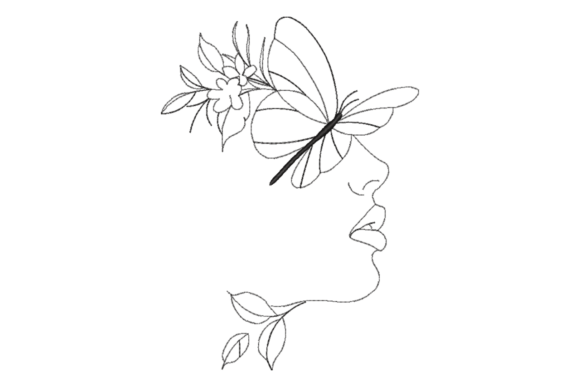
The moment you load this design, the first thing that strikes you is its restraint. In a market saturated with overly detailed, colorful floral fills, Butterfly Face Line Art offers a breath of fresh air through its continuous line approach. It feels less like a literal depiction of an insect and more like a modern art print brought to life through needlework. The mood is serene, slightly whimsical, yet undeniably chic.
For the creative entrepreneur, this visual personality is gold. It bridges the gap between nursery decor and adult fashion. The "face" aspect of the butterfly adds a touch of surrealism that invites the viewer to look closer, while the line art style ensures that the design remains legible even at smaller scales. It creates a sense of abstract elegance that works beautifully for brands aiming for a clean, contemporary look rather than a rustic or vintage vibe.
Real-World Application: From Sketch to Stitch
Let’s talk about real project use. Imagine you are preparing a custom order for a client who wants a personalized gift for a baby shower. You are considering a soft cotton onesie or a muslin swaddle blanket. Here, Butterfly Face Line Art shines. Because the design relies on open space and thin lines, it avoids the heavy, stiff feel that dense fill stitches can sometimes create on delicate baby fabrics. It looks soft, gentle, and inviting—exactly what parents want for their little ones.
Now, shift the scenario to a craft fair booth. You are displaying tote bags made of sturdy canvas. A small, centered placement of this design on the front pocket of a tote bag elevates the product instantly. It transforms a basic accessory into a tote bag design that looks curated and intentional. The minimalist nature of the artwork allows the texture of the canvas to show through, creating a beautiful interplay between fabric and thread. It suggests quality without shouting for attention.
I also see this working exceptionally well for sweatshirt embroidery. Placed subtly over the heart or down the sleeve, the line art provides a sophisticated accent that doesn’t overwhelm the garment. It appeals to the customer who wants something unique but wearable every day. For an Etsy seller, this versatility is key; the same file can be marketed toward mothers, fashion-forward young adults, and home decorators simultaneously.
Technical Performance and Stitch Clarity
From a technical standpoint, line art designs are deceptively tricky. They require precision. If the stitch density is too low, the lines may look broken or shaky. If the tension is off, the single strands can pucker the fabric. Based on the structure of Butterfly Face Line Art, it appears to rely heavily on smooth satin stitches or fine running stitches to maintain its continuous flow. This means your machine settings must be dialed in perfectly.
When stitching this out, the clarity of the edges is paramount. Unlike a fill stitch where minor imperfections can be hidden by the mass of thread, a line art design exposes every wobble. However, when executed correctly, the result is incredibly sharp and professional. The design benefits greatly from high-quality polyester threads that have a slight sheen, which helps the lines pop against the fabric background. For a commercial embroidery project, consistency across multiple units is vital, and this design’s simplicity makes it easier to batch-produce with uniform results.
Where to Use It Carefully
While this design is versatile, it is not a universal fit. There are specific scenarios where Butterfly Face Line Art might struggle:
- Small Hoop Sizes: While the design is elegant, extremely small placements (under 2 inches) may cause the delicate details of the face and wings to merge into a blurry blob. Always test the smallest intended size.
- Textured Fabrics: Bouclé, chunky knits, or heavily napped fleece will obscure the fine lines. The design needs a relatively smooth surface to maintain its crisp appearance.
- Stretchy Fabrics: Unless you are using a strong tear-away or cut-away stabilizer, stretchy jersey or spandex blends can distort the continuous lines, making the butterfly look warped.
- Dense Stitch Areas: Avoid placing this design directly adjacent to very dense block fills without adequate spacing. The contrast between the airy line art and heavy fill can look unbalanced.
Product Value and Customer Perception
In the world of handmade goods, presentation is everything. A well-executed embroidery project builds trust. When a customer sees a clean, precise line art design, they perceive higher craftsmanship. Butterfly Face Line Art enhances the perceived value of your handmade product because it signals attention to detail. It looks expensive, even if the material costs are modest.
For digital product sellers, this design is also a strong asset. It renders beautifully in printable mockups and serves as an excellent design asset for branding materials. Its abstract nature allows it to be used in logos, business cards, and social media graphics, providing cross-platform consistency for your craft business.
Practical Designer Notes Before You Stitch
Before you commit this design to a final sale item, I recommend following these practical steps to ensure success:
- Test on Scrap Fabric: Never assume how a design will behave until you stitch it. Test on the exact fabric type you plan to use, including any interfacing or stabilizers.
- Check Thread Contrast: Black thread on black fabric will disappear. White thread on white fabric can vanish. Choose thread colors that offer enough contrast to define the lines, whether you are going for a tonal look or a bold statement.
- Review Stitch Density: Zoom in on the digital preview. Are there areas where the lines overlap awkwardly? Ensure the stitch density is appropriate for the fabric weight.
- Inspect Small Details: Look closely at the antennae and wing tips. These are the first places to fray or break if the thread quality is poor or the trim isn't clean.
- Confirm Licensing: If you intend to sell finished items, verify the license terms associated with the digital embroidery file. Some designers restrict commercial use, while others allow it with attribution.
Ultimately, Butterfly Face Line Art is a sophisticated choice for designers who want to add a touch of modern elegance to their portfolio. It is not just another bug design; it is a statement piece that rewards careful execution. By respecting its delicate nature and choosing the right fabrics and threads, you can create stunning personalized gifts and small shop products that resonate with customers looking for quality and style. Whether you are decorating a kitchen towel or branding a new clothing line, this design proves that sometimes, less really is more.